Thursday, 24 June 2010

Buying New Technology

Unlike my normal rants about politics, I'd like to change the tone slightly and offer some advice on buying new technology, and especially computer technology, based on the following article:-
Early reports from the US by users of Apple's new iPhone 4 suggest that a design fault means its reception worsens when held with the hand wrapped around the phone.
Dozens of videos posted to YouTube, along with comments from people whose phones were delivered early yesterday - ahead of today's official launch - show that reception appears to wane if people hold it with their hand touching the metal rim around the phone that forms its two wireless antennae.
My simple advice is as follows:-

  1. Never buy anything new on day 1 or as a pre-order. Ever. There's a big difference between someone standing on a stage going through a rehearsed demo and what happens when it reaches someone's hands. I don't blame Apple or any other tech company for this. It's just a fact of life. I've built huge, complicated software systems, tested them to death and once the users start using it, stuff that we didn't think of started to appear.
  2. If you can, wait for version 3 of the product, or in the case of Windows releases, wait for 2 major service packs (bug releases) to happen. I'm not sure quite why it's always version 3/2 major service packs, but my feeling is that v1 is often a bit ropy, and so v2 is a huge improvement, ironing out the big bugs. Then v3 irons out the lesser, but often still quite important bugs, and you have a mature, useable technology.
The other thing is that buying v3 of some technology, or waiting a while means that other people pay for the bulk of the R&D costs while also suffering all the bugs and design problems. You get to enjoy a mature, stable product.

Now, you might say "but someone has to be an early adopter". Well, yes. Rich idiots, mostly. They do it, you benefit.

Wednesday, 23 June 2010

Should we close down Libraries?

In amongst all the various chancellor's cuts in the budget, I've been reading around and came across something from the Good Library Blog about library lending costs:-

The average cost of borrowing a book in the central London boroughs in 2005/6 was
Camden £11.50
Greenwich £7.14
Hackney £10.07
Hammersmith £6.63
Islington £10.46
Kensington £8.54
Lambeth £10.29
Lewisham £5.77
Southwark £6.89
Tower Hamlets £9.90
Wandsworth £3.64
Westminster £5.91
When it's costing £10/lend, it makes no sense at all. You can buy a hardback edition of the 1st Harry Potter for less than that. Even at £3.64, you can buy a paperback of a Jules Verne novel.

And bear in mind, that's a BUY, not a lend. My last book, Harry Markopolous' book about Madoff was about £17, but I'll lend that to someone who will read it, meaning it cost no more than £8.50/read.

So, give people the money, let them buy books and lend to each other, or resell or give to charity. It's now a more efficient model than public libraries.

Tuesday, 22 June 2010

Ah Polly

From today's Graun:
Labour appears to have done well. When Jacqui Smith boasted there was less risk of becoming a victim of crime at any time since records began, she was not far out. On Labour's watch, crime fell by about 40%; property crime was halved. Last year violent crime fell 6%, marking a 20-year low in homicide.
Thing is that it had almost nothing to do with Labour. If you want to credit anyone with the falling rate of property crime, it's the Chinese. When DVD players and freeview boxes are £20 retail, how much are you going to get down the pub for a stolen one?

Monday, 21 June 2010

Times Paywall

I was tempted to log on to the Times Paywall to read something of Caitlin Moran's (about Paywalls). I wouldn't waste your time.

In a nutshell, it was a general whine about how great things were in the 20th century, how she had bills to pay, how no-one expects to get solid products for free like they do creative products. The irony is that no-one said "what are these typesetters going to do about getting fed". The Times just booted them out as a result of technology.

Let me restate this point: The reason that journalism is struggling to pay the bills is that they ask too much for too little. If you're not stunningly good at it (and 90%+ of opinion columnists aren't), then you're competing with the rest of the blogs who are doing it for little more than AdSense revenues.

Thursday, 17 June 2010

The Times Paywall Business Model in Full

  1. Charge people to read the same stories that they can read elsewhere and some opinion columnists that are hardly better than the best bloggers
  2. ?
  3. Profit!

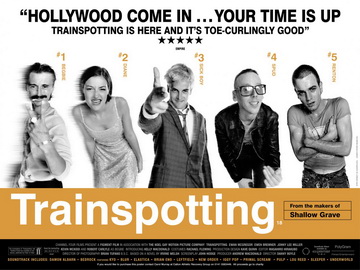
Danny Boyle to Direct Olympic Ceremony

Well, he's previously directed a movie about young people taking illegal drugs in a run down part of a British city, so he seems like the perfect candidate.

Wednesday, 9 June 2010

Little Billionaire Bastard

From the Telegraph:-

Tory MP and environment campaigner Zac Goldsmith told the programme: "If you lump gardens and wasteland in the same category, developers will always go for gardens because it's easier and cheaper.
"We are not saying there shouldn't be development, there are other alternatives. There are a lot of empty homes.
"We want to protect gardens so that instead of being top of the list for developers, they are at the bottom."

  1. No, the fact is that we have just about run out of wasteland. Labour (to their credit) did a lot to ease building on wasteland in their time in power and builders responded. As a result, we have a map like this: http://www.londonbrownfieldsites.org/Mapping/. No, don't look at the pinkish bits. It's the brown specs on that map which show derelict land/buildings. See them? Good luck with that. In London, there just isn't any. The builders have used it up. 
  2. No, there aren't lots of empty homes. In the South of England, less than 2.5% of homes are empty.The Empty Homes Agency estimate that if all Britain's empty houses were brought back into use, it would meet 2 years of the government's growth needs. In the South of England, less than 2.5% of homes are empty.
  3. The problem is that there is little derelict land, the government have taken away local building targets and so there will not be much land made available.
We are going to enter into a housing crisis after 5 or 10 years because of these stupid, NIMBY policies